Ask The County Agent: ‘What’s wrong with my cucumbers?’
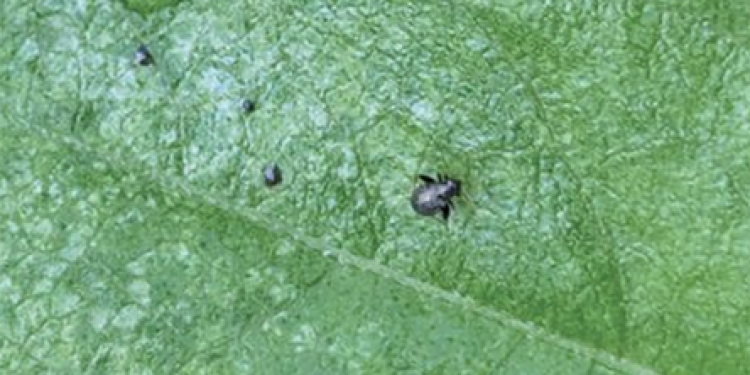
Pictured above: A close up photo of a flea beetle on a zucchini leaf. (Coweta County Extension photo)
By STEPHANIE R. BUTCHER, UGA Extension Coweta County Coordinator
QUESTION: “What’s wrong with my cucumbers?”
AGENT: This is from flea beetle damage. Flea beetles have been feasting on our squash, cucumbers, zinnias, and other plants at our Extension Inspiration Garden this summer.
They are only 1.5 – 3 mm long, and their damage is easy to identify as leaves become skeletonized due to the feeding of adult flea beetles. When plants are mature, they can tolerate the damage and you should still be able to have a fine crop. If the infestation is severe or the flea beetles have found young, small plants, then the beetles can severely damage the plant and cause a reduced yield.
You will notice the small beetles will jump if they are startled, which is how they came to be called flea beetles. Female beetles will lay eggs around the plant. Emerging larvae will head into the soil and could possibly feed on plant roots. The mature beetle will emerge to feed on your plant leaves. The insects overwinter as adults in plant debris and litter in the top of the soil. There will be more than one generation per year.
After you have harvested your crop and the plants are finished for the summer, then you need to remove all plant debris from the soil bed. I would caution in planting collards or any other leafy green in that same soil this fall.
Since you are growing leafy greens for the leaves, you will want to avoid flea beetle damage. Any larvae left in the soil after your remove plant debris could emerge to find your greens a tasty meal.
There are chemical controls available if needed. Biological control options include pyrethrins. Pyrethrins are produced by some varieties of chrysanthemum flowers. Always read and follow label directions and avoid applying pyrethrins during bloom and during times when pollinators are active. Some pyrethrin products include Garden Safe, Ortho Ecosense, Bonide and others.
For more information about flea beetles or controlling pests in vegetable gardens, contact the Coweta County Extension office at 770-254-2620 or [email protected].
The University of Georgia College of Agricultural & Environmental Sciences is an Equal Opportunity, Affirmative Action, Veteran, Disability Institution.
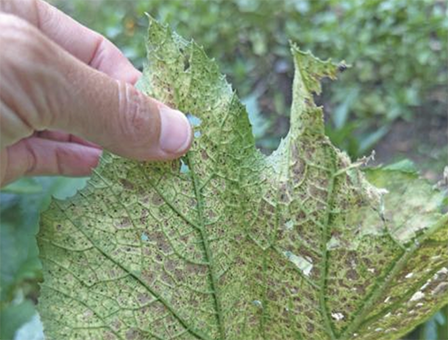
Severe flea beetle damage. (Coweta County Extension photo)