Ask The County Agent: What’s wrong with my Basil?
By STEPHANIE R. BUTCHER, UGA Extension Coweta County Coordinator
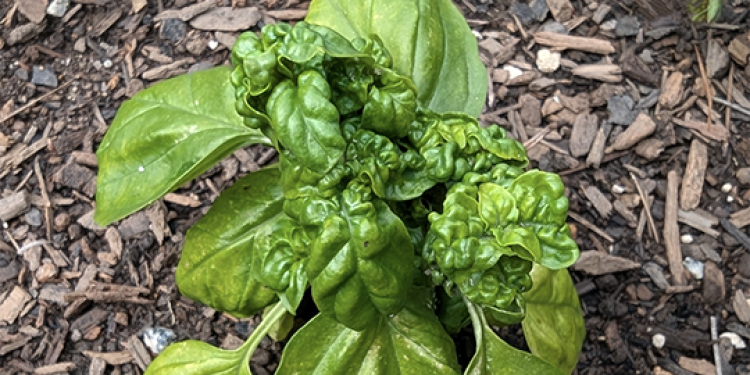
QUESTION: What is wrong with my basil? The leaves are curling.
AGENT: The deformed leaves on this basil plant are caused by aphids. Aphids are soft bodied insects that pierce the plant tissues with their mouth parts and feed on plant juices. They are attracted to many landscape and vegetable plants including camellia, crape myrtle, roses, daylilies, tomatoes, peppers and more.
Damage caused by aphids is sometimes mistaken for herbicide damage or disease, but if you look closely on the undersides of the leaves and stems, then you can see tiny aphids that are usually about 2 mm in length. They can be a variety of colors depending on the species – red, green, and yellow are common and young nymphs are usually off-white in color. In photo 2, you can see several stages of aphids including the shed white skins of nymphs that have molted.
Honeydew is a sugary substance that is excreted from the aphid’s system. It creates a sticky layer on the surface of leaves. This layer causes sooty mold to develop on the honeydew and can cause the leaves to turn from green to black. Sometimes you will also find ants on the plants since ants are attracted to the sugary honeydew.
Aphids can also spread viruses to healthy plants, and since viruses cannot be cured, the key is to prevent and reduce the spread. Always plant resistant cultivars, and plant them early in the season.
Aphid populations are usually kept under control by natural predators like lady beetles and parasitic wasps, but if aphid damage is severe, then you can consider spraying the aphids off with a strong stream of water or treating with insecticidal soaps or horticultural oils. To be effective, these products should be applied directly to the aphids and should not be applied at temperatures above 90 degrees. Be sure to get good coverage on the undersides of the leaves. The label is the law, so always read and follow the label directions when applying insecticides.
Since aphids can have several generations during the growing season, multiple treatments may be necessary to control them.
For more information about controlling aphids, contact the Coweta County Extension office at 770-254-2620 or email [email protected] and ask for the publication, “Aphids on Flowering Ornamental Plants in the Landscape” and the “Georgia Pest Management Handbook”.
The University of Georgia College of Agricultural & Environmental Sciences is an Equal Opportunity Institution.

Aphids on a basil leave. Photo by Coweta County Extension.