PNH: What You Need to Know About Atrial Fibrillation
From PIEDMONT NEWNAN HOSPITAL
September marks National Atrial Fibrillation (AFib) Awareness Month.
According to the American Heart Association (AHA), AFib is an irregular heartbeat (arrhythmia), a condition where the heart beats in an irregular, often fast, way. When a heart is in AFib, it may not be pumping enough oxygen-rich blood out to the body, which can led to other heart-related complications.
According to the Centers for Disease Control and Prevention (CDC) it is estimated that 12.1 million people in the U.S. will have AFib in 2030. While it is the most common type of arrhythmia, many people do not know they have AFib until they are at a routine doctor’s appointment or they are hospitalized for complications caused by AFib. Compared to people without, those with AFib, even without symptoms, have a five-times-greater risk of stroke, three-times-greater risk of heart failure and two-times-greater risk of dementia.
Board-certified electrophysiologist and cardiologist Aaron Cole Richardson, D.O., who joined Piedmont Heart Institute last year, says it is important for local residents to increase their awareness of atrial fibrillation and other common conditions treated by electrophysiology, because without treatment, AFib can lead to blood clots, stroke, and heart failure.
Symptoms can include:
• Rapid or irregular heartbeat or pulse
• Skipped heartbeats
• Chest palpitations (common)
• Lightheadedness or fainting
• Confusion
• Extreme fatigue
• Shortness of breath
• Chest pain, or angina (seek immediate medical attention at an emergency room)
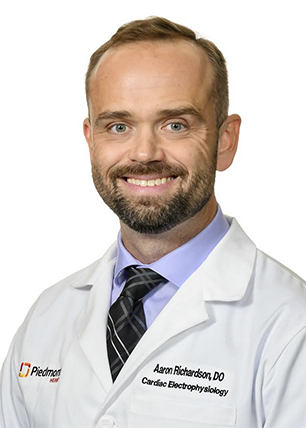
Dr. Aaron Cole Richardson
Dr. Richardson cautions patients not to overlook the more subtle symptoms, such as fatigue, if they do not experience palpitations, as they may or may not be present.
“Different patients have different symptoms. Some describe AFib as feeling like skipped heartbeats; some as an erratic heartbeat, strong heart palpitations, or simply a rapid heartbeat; while for others it feels like a fluttering, butterflies or even a flopping fish in their chest; while some patients don’t have any symptoms at all,” says Dr. Richardson. “If you suspect you may have this condition or another cardiac issue, he recommends scheduling an appointment with a cardiologist as soon as possible.”
Dr. Richardson also recommends seeing your primary care physician (PCP) annually and to be aware of any factors that may increase your risk of AFib, including high blood pressure, a prior heart attack or heart disease, diabetes, sleep apnea, and prior heart surgery. Controlling these risk factors may prevent AFib from developing. In addition to regular check-ups with your PCP, Dr. Richardson recommends self-monitoring your heart at home, and checking it on a daily basis.
“If you notice your heartrate is greater than 110bpm at rest and/or irregular, it’s probably time to visit and talk with your doctor about it,” explains Dr. Richardson.
While AFib is serious, Dr. Richardson says that early detection and management are key.
“People can live long, healthy and active lives with AFib. Controlling your risk factors for heart disease, stroke and knowing what can trigger your AFib will help improve your long-term management of AFib. The most important thing you can do is work with your doctor or other health care professionals to make sure you’re doing all you can to prevent complications that could occur as a result of AFib,” says Dr. Richardson.
Dr. Richardson is board certified in Internal Medicine, Cardiovascular Diseases and Clinical Cardiac Electrophysiology. He specializes in the treatment of heart rhythm disorders ranging from atrial fibrillation,
supraventricular tachycardia, heart block, bradycardia, atrial flutter, premature ventricular contractions, and
ventricular tachycardia, with a special interest in the treatment and management of atrial fibrillation, leadless
pacing, and cardiac resynchronization therapy.
Available at Piedmont Heart Institute in Newnan and Fayetteville, Dr. Richardson welcomes new patients and
accepts most insurance plans. To schedule an appointment, visit piedmont.org.