Ask The County Agent: Kissing Bugs and Chagas Disease
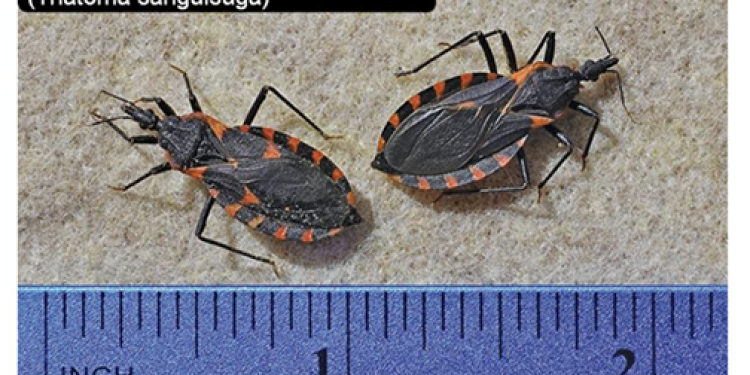
By STEPHANIE R. BUTCHER, UGA Extension Coweta County
QUESTION: “I have collected a kissing bug. Who should I contact about testing it for Chagas Disease?”
AGENT: Don’t panic. You do not need to test this insect for Chagas disease. The kissing bug is back in the news, but there is very little risk of getting Chagas disease from them or even seeing one if you live in a house in Georgia.
Here are the facts.
Kissing bugs have been in Georgia for centuries and most are not infected with the parasite that causes Chagas disease. Even if you were to see a kissing bug, it is not likely to be infected with the parasite, Trypanosoma cruzi, that causes the disease.
The only way you could get sick from a kissing bug is if an infected bug’s feces entered through a break in the skin, were rubbed in your eyes, was ingested or inhaled. Being bitten by the insect does not transmit the parasite. Kissing bugs feed on raccoons, opossums, skunks, armadillos and other wild mammals. Unless you are frequently cleaning up wild animal nests, then the average person has little chance of coming into contact with the parasite, and even then it would have to enter the body by one of the four ways listed above.
There have been no documented cases of Chagas disease transmission to humans in Georgia. Here in the Southeast, we have a much better chance of being bitten by a tick and contracting a tickborne illness than getting sick from kissing bugs.
So why are they in the news? Because kissing bugs are more prevalent in Central and South America, some areas in Texas that are just north of Mexico have more infected kissing bugs, and they have had cases of human infections.
As with any insects, the best way to keep your home pest free is by turning off porch lights at night. Seal around your doors and windows with weather-stripping and replace door sweeps. This is a great time to do these chores too because cold weather is sending insects into hibernation, and they are looking for places to overwinter.
If you find an insect that you suspect may be a kissing bug, take a clear photo and email it to the Coweta County Extension office at [email protected] or call the office at 770-254-2620 for more information. Use caution when handling insects. Kissing bugs and some “look-alikes”, like the wheel bug or assassin bug, can bite.
The University of Georgia College of Agricultural & Environmental Sciences is an Equal Opportunity Institution.
Photo Credit: Ohio State University Extension – Joe Boggs