Weatherproof your home; avoiding storm-related scams
By LaTINA EMERSON, The Shopper Deals
 Extreme weather events, such as tornadoes and hurricanes, and colder temperatures, can cause extensive and costly damage to our homes. To save time and money, it’s important to prepare your home for inclement weather, as well as avoid falling prey to storm-related scams.
Here are some tips on how to protect your home and wallet during weather-related emergencies from Progressive Casualty Insurance Co., American Red Cross, Georgia’s Insurance and Safety Fire Commissioner and Georgia’s Office of the Attorney General:
Prepare Your Home
Trim your trees
To protect your home and neighbors’ homes from falling trees, trim the branches near your house and identify trees that are dead, dying or diseased. Also, look for limbs that are weak, broken or too close to your house. Hire a professional tree-cutting and removal service to avoid damaging your trees, according to Progressive Casualty Insurance Company.
Weatherproof your home
When intense storms are forecasted, cover windows and doors (including sliding glass and garage doors) with plywood. Inspect windows and doors for cracks, rot or drafts, and seal openings and gaps with caulk to prevent water leaks and bugs from entering. Examine your roof and make repairs to seal openings and secure loose roofing materials. Keep gutters clean to collect and move rainwater away from the home and help prevent leaks from getting into siding, the attic or the home’s foundation. Also, install storm shutters over windows and doors in advance.
Secure loose objects
Strong winds can send loose objects flying at high speeds that can cause damage. If storms are on the way, bring objects inside that aren’t anchored down or store them securely. This includes outdoor furniture, tools, lawnmowers and other equipment. If you have a boat on a trailer, anchor the trailer to the ground or store it in a garage.
Arrange for backup power
In case of power outages, consider purchasing a generator to power essential appliances. This could prevent losing food stored in your refrigerators and freezers. There are several types of generators, including small recreational units that can power a single appliance, to standby models that can power your entire house, according to Progressive Casualty Insurance Company.
Use ice to preserve food, medicine
If the power goes out and you don’t have a generator, have ice ready in a cooler to keep food and medicine in your refrigerator and freezer cool so that it won’t spoil. Also, avoid opening and closing your refrigerator and freezer unnecessarily, which lets out cool air.
Gather basic supplies
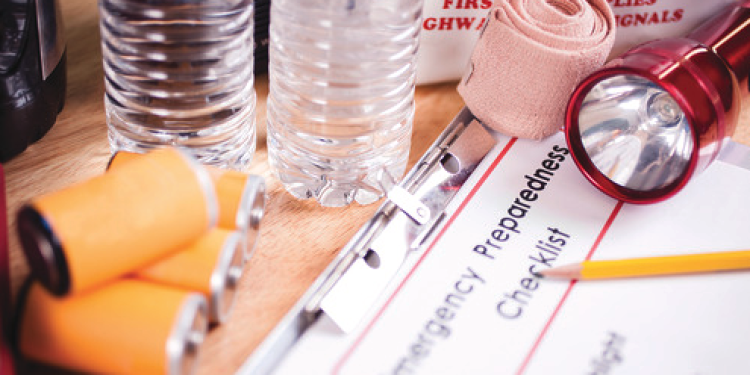
Before an emergency or disaster occurs, it’s important to gather supplies for an emergency preparedness kit that you can use at home or if you need to evacuate. Here are some recommended items from the American Red Cross:
- Water: one gallon per person, per day (3-day supply for evacuation, 2-week supply for home)
- Food: non-perishable, easy-to-prepare items (3-day supply for evacuation, 2-week supply for home)
- Flashlight
- Battery-powered or hand-crank radio (NOAA Weather Radio, if possible)
- Extra batteries
- First aid kit
- Medications (7-day supply) and medical items
- Multi-purpose tool
- Sanitation and personal hygiene items
- Copies of personal documents (medication list and pertinent medical information, proof of address, deed/lease to home, passports, birth certificates, insurance policies)
- Cell phone with chargers
- Family and emergency contact information
- Extra cash
- Emergency blanket
- Map(s) of the area
Handle Business Affairs
Secure important documents
In case your home experiences storm damage or you need to evacuate, place important documents in waterproof containers or back them up digitally.
Review your insurance policy
Look at your homeowners insurance policy to understand what is covered regarding storm-related damage. Contact your insurance company to find out if windstorms, such as hurricanes, are covered on your policy, according to Progressive Casualty Insurance Company.
Take inventory
Before a storm occurs, it’s important to take precautions. In a press release, Georgia Insurance and Safety Fire Commissioner John F. King urged Georgians to follow these tips before and after Hurricane Helene.
- Prior to the storm, make a list of all your covered items (furniture, electronics, appliances, valuables, etc.). Keep an electronic copy of this list, which should include pictures.
- Write down and photograph all property damage, including broken windows, damaged roofs, lost personal items and more.
- Notify your insurance company of any damages immediately.
- Do not attempt significant or permanent repairs.
- If it’s safe to do so, cover your roof with a tarp or board up broken windows but leave significant repairs to the experts.
- Save all receipts. They will be useful if you file a claim with your insurance company.
Avoid Storm-related Scams
Attorney General Chris Carr warns Georgians to be on the lookout for possible storm-related scams related Hurricane Helene.
“Unfortunately, criminals will often try to take advantage of those impacted by severe weather,” Carr said in a release from the Office of the Attorney General. “Make sure you know how to spot and report a scam before turning over your hard-earned dollars, and contact our Consumer Protection Division if you’re in need of assistance.”
These scam artists, known as storm chasers, “may ask homeowners for up-front payments for home repair service and then disappear without ever doing the work. Or scammers may charge exorbitant prices for tree removal, charge you for unnecessary repairs or do substandard work. Scammers may offer to cover the homeowner’s insurance deductible and persuade homeowners to give fake reports to the insurance company, potentially implicating the homeowner in a case of insurance fraud,” according to a press release from the Office of the Attorney General.
The Attorney General’s Consumer Protection Division offers tips to help consumers avoid scams and other fraud in the aftermath of a storm:
- Steer clear of any contractor who asks for full payment up-front, only accepts payment in cash, or refuses to provide you with a written contract.
- Avoid door-to-door offers for home repair work. Instead, ask friends and neighbors for referrals.
- Be skeptical of any contractor that offers to pay your insurance deductible or offers other no-cost incentives, which can be signs of a scam. Always talk to your insurance company before committing to any storm-related repairs or inspections.
- Ask contractors for references and check them out.
- Check with the Better Business Bureau (BBB) to see if there are any complaints against the business.
- Ensure that the contractor has the required licensing and/or affiliation:
- Tree Removal: Check with the International Society of Arboriculture to make sure the person has a valid arborist license.
- Water Damage and Mold: Only hire businesses that are local and qualified in mold remediation and property restoration. To find local contractors and restorers, check with the Society of Cleaning and Restoration Technicians and the Restoration Industry Association.
- Contractors: General contractors, electricians, plumbers, and heating and air conditioning contractors must be licensed with the Georgia Secretary of State’s Office. To look up a contractor, visit sos.ga.gov. Please note that certain specialty occupations such as roofers, tree removal services, painters, drywall contractors and repair handymen are not required to be licensed by the state.
- Legitimate contractors should be able to provide the following:
- Business license
- General liability insurance
- Workers compensation insurance
- Written manufacturer warranties
- Written labor warranties
- Public adjusters are also required to carry a license to do work in Georgia. Before hiring a public adjuster to do any work on your behalf, call the Insurance Commissioner’s Office at 1-800-656-2298 to verify that he/she is licensed and that his/her contract has been approved.
For additional information, visit https://consumer.georgia.gov/consumer-topics/storms-fraud.


