Ask The County Agent: ‘How can I grow my own Vidalia Onions?’
By STEPHANIE R. BUTCHER, UGA Extension Coweta County Coordinator
QUESTION: How can I grow my own Vidalia® onions?
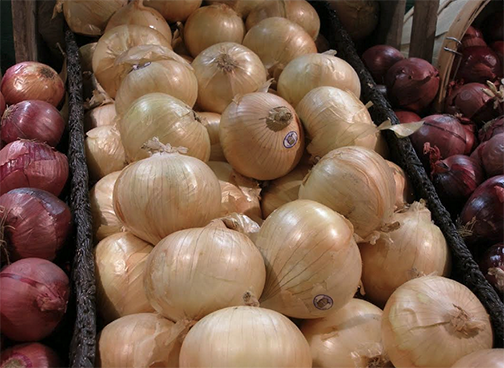
AGENT: Vidalia onions are my favorite and are one of the most popular and well-known vegetables produced in Georgia. So what makes a Vidalia onion a “Vidalia” and not just a sweet onion?
These onions were discovered by accident during the Great Depression, and the Vidalia Onion Act of 1986 granted the trademark of the name “Vidalia onions”. The Act specified that they could only be grown in a particular region of South Georgia that includes twenty counties.
Vidalia onions are grown from Granex seed, and in order to sell and market them as Vidalia , you must apply for a license through the Georga Department of Agriculture by March 1. However, you can grow “sweet” onions anywhere in Georgia.
Why are Vidalias so sweet? Actually, the term sweet is misleading because Vidalia onions do not have more sugars than other onions. The reason they taste so sweet is that they have less of the hot, pungent compounds. The level of these chemicals in the onion is controlled by the way the onions are grown. In fact, the low sulfur levels in some of our Georgia soils increase the “sweetness” of our onions. Here are a few tips that you can use to grow sweet onions yourself.
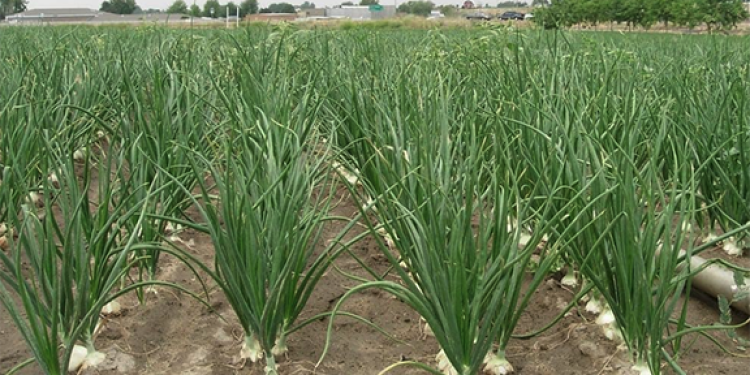
Plant onions in the fall and winter. Growers seed them in September and transplant into the field in November and after. I don’t recommend that you start with seed. The plants are very small at first and die easily. Buy transplants now, and plant about six inches apart in the garden. Select plants about the diameter of a pencil.
Try to buy Vidalia-type varieties. These are generally milder. If you cannot find plants in your local garden center, then look for them in the Market Bulletin published by the Georgia Department of Agriculture – (404) 656-3722.
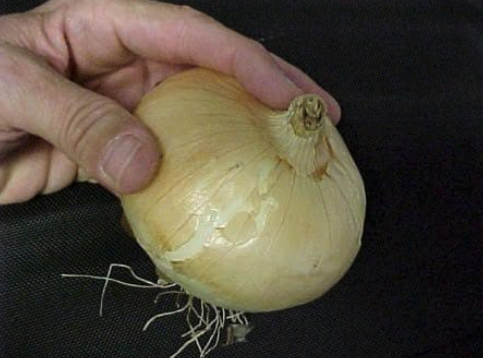 Sulfur is an essential plant nutrient, but too much of it applied late in the season on onions can make them more pungent. How can we control the amount of sulfur plants get?
Plant in a sandy, well-drained soil. Heavy clay soils naturally have more sulfur in them, so depending on your soil type, you may need to amend the soil to grow a sweeter onion. Carefully control fertilizers which contain sulfur. You must apply some sulfur but not too much and especially not too late. Follow this schedule.
At planting (around November 25) incorporate one and one-half pounds of 5-10-15 or 10-10-10 per 100 square feet of garden. Side-dress lightly 30 days and 60 days after planting with 3/4 lb. of the same fertilizer per 100 linear feet of row.
After late January, change to fertilizers that contain no sulfur. These would include calcium nitrate, potassium nitrate or sodium nitrate. Apply 3/4 lb. of these per 100 linear feet of row every four weeks until March 20. These last fertilizers are hard to find. If necessary, you can use ammonium nitrate to side dress, but only apply ½ lb. per 100 linear feet.
Keep the onion roots moist but not wet. This is especially important after mid-March when they begin to bulb. They may need 3/4 inch of water twice a week then. Let the onion beds dry out as they approach harvest.
Harvest when the necks (between the leaves and bulbs) get soft and the tops fall over. Let onions dry very well in a shady spot before clipping the tops and roots and storing them.
These tips should help you grow a good crop of sweet onions. Just remember that you cannot sell or market them as “Vidalia onions” if you did not grow them in the region specified in the Vidalia Onion Act.
For more information about fall vegetable gardening, contact the Coweta County Extension office at 770-254-2620 or email [email protected]. The University of Georgia College of Agricultural & Environmental Sciences is an Equal Opportunity, Affirmative Action, Veteran, Disability Institution.
Photo Credits: Willie Chance, UGA Cooperative Extension and UGA Cooperative Extension